
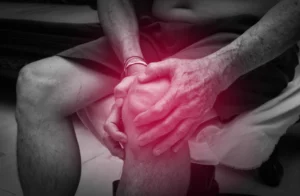
 For many patients with mild to moderate knee osteoarthritis, shockwave therapy can help avoid knee replacement by reducing pain and improving function enough to delay or skip surgery altogether — though it isn’t a cure for bone-on-bone arthritis and won’t regrow cartilage that’s already gone. At Dohrmann Chiropractic in Kansas City, we see this question constantly from active adults who’ve been told a knee replacement is in their future and want to know if there’s a real alternative worth trying first.
How Does Shockwave Therapy Help an Arthritic Knee?
Shockwave therapy uses SoftWave’s electrohydraulic acoustic waves to increase blood flow to the joint, reduce chronic inflammation, and stimulate the body’s own healing response in the tissue surrounding a worn knee joint. It can’t regenerate cartilage that’s completely gone, but for many patients, the pain from knee osteoarthritis comes as much from inflammation and irritated surrounding tissue as it does from the cartilage loss itself — and that’s exactly what shockwave therapy is designed to address.
Who Is a Good Candidate to Avoid Knee Replacement With Shockwave Therapy?
The best candidates for using shockwave therapy to help avoid knee replacement are patients with mild to moderate osteoarthritis who still have some cartilage remaining and haven’t reached bone-on-bone contact. If X-rays or an MRI show significant joint space still present, there’s more tissue for the treatment to work with, and patients in this category often see meaningful pain reduction and improved mobility.
Patients who are earlier in the arthritis process, more active, and haven’t yet had significant muscle weakness or joint deformity develop around the knee also tend to respond better. We review your imaging and history honestly before recommending a treatment plan, because setting realistic expectations upfront matters more than promising results we can’t deliver.
When Is Knee Replacement Still the Right Choice?
Knee replacement remains the right choice for patients with severe, bone-on-bone arthritis, significant joint deformity, or pain that’s dramatically limiting quality of life despite trying conservative treatment. Shockwave therapy is not a substitute for surgery in every case — for advanced arthritis where the joint surfaces are grinding directly against each other, no amount of increased blood flow or reduced inflammation can replace cartilage that’s simply not there anymore.
We’re upfront with patients about this. If your imaging shows advanced, end-stage arthritis, we’ll tell you honestly whether shockwave therapy is likely to provide meaningful relief or whether surgical consultation is the more appropriate next step.
How Many Shockwave Treatments Does It Take to Notice a Difference in Your Knee?
Most patients using shockwave therapy for knee arthritis need a series of six to ten weekly sessions, with many noticing initial improvement in pain and mobility within the first three to five treatments. The improvement tends to build gradually rather than happening all at once, since the treatment is stimulating actual tissue healing rather than masking pain temporarily.
Some patients with milder arthritis notice a difference sooner. Those with longer-standing, more advanced degeneration sometimes need the full course of treatment, and occasionally periodic maintenance sessions afterward, since osteoarthritis is a progressive condition that benefits from ongoing management.
What Does the Research Say About Shockwave Therapy and Knee Arthritis?
Published research on shockwave therapy for knee osteoarthritis shows meaningful reductions in pain and improvements in function for a majority of patients, and the treatment is FDA-cleared and used by institutions including the Cleveland Clinic, Mayo Clinic, and Walter Reed Military Center. This isn’t an experimental or fringe treatment — it’s an established option that’s earned its place alongside more conventional conservative therapies for knee arthritis.
Can Shockwave Therapy Be Combined With Other Treatments for Your Knee?
Yes — combining shockwave therapy with chiropractic care and targeted exercise often produces better outcomes than any single treatment alone. Chiropractic adjustments can address compensatory issues in the hip, ankle, or lower back that develop when someone favors a painful knee, while shockwave therapy works directly on the joint tissue itself. Dr. Ben Dohrmann, Dr. Kevin McFadden, and Dr. Frank Siraguso build these combination plans based on your full evaluation, not a one-size-fits-all protocol.
What Happens If Shockwave Therapy Doesn’t Fully Resolve Your Knee Pain?
If shockwave therapy doesn’t provide enough relief to help you avoid knee replacement, that’s valuable information, not wasted effort — it tells us and your orthopedic surgeon exactly how advanced the joint degeneration really is. Many patients who complete a course of shockwave therapy and still need surgery report an easier recovery afterward, since they enter surgery with better surrounding muscle strength and less compensatory dysfunction than if they’d gone straight to the operating room.
We’ll never string you along with treatment that isn’t working. If your progress stalls, we’ll have that honest conversation and help you understand your next options.
Why Kansas City Patients Trust Us With This Decision
Our team has helped patients throughout Kansas City, Gladstone, Parkville, Liberty, Smithville, Clay County, and Platte County explore every reasonable option before considering surgery, using SoftWave technology trusted by the Cleveland Clinic, Mayo Clinic, and Walter Reed Military Center. We’ll give you a straight answer about whether shockwave therapy is likely to help avoid knee replacement in your specific case — not a sales pitch.
Schedule online, call or text us at (816) 436-5520, or visit us at 9576 N McGee St, Kansas City, MO 64155.
Frequently Asked Questions
Can shockwave therapy help avoid knee replacement?
For many patients with mild to moderate knee osteoarthritis, yes — shockwave therapy can reduce pain and improve function enough to delay or avoid surgery, though it won’t regenerate cartilage in severe, bone-on-bone arthritis.
Who is a good candidate for shockwave therapy on their knee?
Patients with mild to moderate osteoarthritis who still have some joint space and cartilage remaining tend to respond best, especially those who are still relatively active.
How many shockwave treatments does it take to help knee arthritis?
Most patients need six to ten weekly sessions, with many noticing initial improvement within the first three to five treatments.
Does shockwave therapy work for severe, bone-on-bone knee arthritis?
It’s less likely to provide meaningful relief for severe, end-stage arthritis, since the treatment can’t replace cartilage that’s completely gone. Surgical consultation is usually more appropriate in these cases.
Is shockwave therapy for knees backed by research?
Yes. Published research shows meaningful pain reduction and improved function for many patients, and the treatment is FDA-cleared and used by institutions including the Cleveland Clinic and Mayo Clinic.
Can shockwave therapy be combined with chiropractic care for knee pain?
Yes. Combining the two often produces better results, since chiropractic care can address compensatory issues elsewhere in the body while shockwave therapy treats the knee tissue directly.
What if shockwave therapy doesn’t fix my knee pain?
If it doesn’t provide enough relief, that tells us and your orthopedic surgeon how advanced the arthritis really is, and many patients who still need surgery afterward report an easier recovery.
Does Dohrmann Chiropractic treat patients outside Kansas City?
Yes. We regularly treat patients from Gladstone, Parkville, Liberty, Smithville, and throughout Clay County and Platte County, in addition to Kansas City itself.