
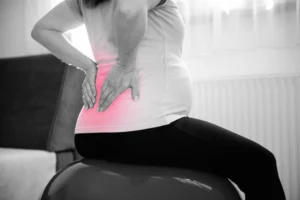
 Sciatica during pregnancy is common, and it’s usually caused by the physical changes of carrying a baby, not by serious nerve damage. Relaxed ligaments, a shifted center of gravity, and pressure from your growing baby can irritate the sciatic nerve or the joints around it, sending pain through your buttock and down your leg. At Dohrmann Chiropractic in Kansas City, our pregnancy chiropractic care is built around gentle, drug-free relief for exactly this kind of pain, so you can get through the weeks ahead more comfortably.
What Is Sciatica During Pregnancy?
Sciatica during pregnancy is pain, tingling, or numbness that travels from your lower back or buttock down the back of one leg, following the path of the sciatic nerve. The nerve is the largest in your body, running from your lower spine through your pelvis and down each leg. When something presses on or irritates it, you feel it along its whole path, which is why the pain often shows up far from its source. You can read more about the condition itself on our sciatica treatment page.
Pain that feels like sciatica isn’t always true sciatica, though. Many pregnant women have pelvic girdle or sacroiliac joint pain that refers into the buttock and thigh and mimics a pinched nerve. Telling the two apart matters because they respond to somewhat different care, and an exam is the only reliable way to sort it out.
Why Does Sciatica During Pregnancy Happen?
Several pregnancy-related changes can combine to cause sciatica during pregnancy:
- Hormones: Relaxin and other hormones loosen ligaments to prepare for birth, which can leave your pelvis and lower back joints less stable and more irritable.
- Posture and weight: As your belly grows, your center of gravity shifts forward and your lower back arches more, loading the joints and muscles that surround the nerve.
- Baby’s position: Your baby’s head or body can press on nerves in the pelvis, especially in the third trimester.
- Tight muscles: The piriformis, a deep buttock muscle that sits next to the sciatic nerve, can tighten and squeeze it.
- Disc problems: Less commonly, a bulging or herniated disc irritates a nerve root, which can also happen outside of pregnancy.
The mix explains why symptoms vary so much from one woman to the next, and why they often get louder as the pregnancy goes on.
Is Sciatica During Pregnancy Dangerous for the Baby?
Sciatica during pregnancy does not harm your baby. The sciatic nerve serves your leg, not your uterus, so the pain itself doesn’t affect your baby’s health or development. It can, however, affect your sleep, mood, and ability to move comfortably, and those are good reasons to treat it. Ongoing pain is also worth mentioning to your OB or midwife so they know what you’re experiencing.
The exception is when leg or back pain is a sign of something else. That’s why knowing the warning signs below is important.
When Should You Call Your OB or Go to the ER?
Call your OB, midwife, or go to the emergency room right away if your pain comes with any of these:
- Swelling, warmth, redness, or pain in one calf or leg, which can signal a blood clot, since pregnancy raises clot risk
- Loss of bladder or bowel control, or numbness in the groin or inner thighs
- Rapidly worsening weakness in a leg, or a foot that drags or slaps when you walk
- Regular contractions, vaginal bleeding, fluid leaking, or a noticeable drop in your baby’s movement
- Severe headache, vision changes, or sudden swelling of the face and hands
- Fever with back pain
These aren’t typical sciatica symptoms, and they need prompt medical attention instead of a scheduled appointment.
What Helps Sciatica During Pregnancy at Home?
Gentle, consistent habits make a real difference. Most women find relief from a mix of the following:
- Side-lying with a pillow between your knees: A full-length pregnancy pillow keeps your hips and pelvis level overnight.
- Warmth: A warm (not hot) compress on your lower back or buttock can ease muscle tightness. Avoid hot tubs and saunas during pregnancy.
- Walking and swimming: Low-impact movement keeps your joints mobile and your muscles supple.
- Maternity support belt: A belt can take some load off your pelvis during longer days on your feet.
- Changing positions: Avoid standing or sitting in one position for long, and avoid crossing your legs.
- Smart lifting: Bend at the knees, keep objects close, and avoid twisting while you lift.
Check with your OB or midwife before taking any pain medication, including over-the-counter options, since some aren’t recommended during certain stages of pregnancy.
Is Chiropractic Care Safe for Sciatica During Pregnancy?
Chiropractic care is commonly used for sciatica during pregnancy when it’s modified for a pregnant body, and our approach reflects that. Instead of lying face down, you’ll be positioned on your side or on a table or pillow setup designed for pregnancy. We use lighter force than for non-pregnant patients, since your ligaments are already looser, and we avoid twisting techniques and pressure on your abdomen. High-risk pregnancies may need adjusted care or your OB’s input, and we’ll tell you if that applies to you.
You don’t need an OB referral to be seen, but we welcome coordination with your OB, midwife, or doula. We also avoid X-rays during pregnancy unless there’s a compelling medical reason, and most pregnant patients don’t need them.
How Does Our Team Treat Sciatica During Pregnancy?
Your first visit starts with your history and a gentle exam of your posture, pelvis, lower back, and nerve function. Dr. Ben Dohrmann, Dr. Kevin McFadden, and Dr. Frank Siraguso look for the true source of your leg pain, whether that’s a pinched nerve, a stiff sacroiliac joint, a tight piriformis, or irritation around the pubic bone.
Care is focused on restoring balanced motion in the pelvis and lower back with gentle chiropractic adjustments, along with stretches, posture tips, and sleep-position advice you can use at home. In the third trimester, we may use pelvis-focused techniques such as the Webster Technique. If your findings suggest a problem outside our scope, we’ll explain why and send you to the right provider.
What Happens to Sciatica After Your Baby Arrives?
For most women, sciatica during pregnancy eases after delivery as hormones settle and your pelvis returns to its usual position, though recovery takes time and some pain lingers. New demands, like nursing, carrying a car seat, and sleepless nights, can strain your back and neck all over again. Read our guide on how soon you can see a chiropractor after giving birth to plan your postpartum care.
Why Kansas City Moms Trust Us With Pregnancy Back and Leg Pain
Dohrmann Chiropractic has cared for expecting mothers from Kansas City, Gladstone, Parkville, Liberty, Smithville, Clay County, and Platte County since 2008, backed by more than 600 five-star Google reviews and 46+ years of combined clinical experience. Our team takes the time to listen, explain what we find, and keep care gentle and appropriate for each stage of pregnancy.
Struggling with sciatica during pregnancy? Schedule online, call or text us at (816) 436-5520, or visit us at 9576 N McGee St, Kansas City, MO 64155.
Frequently Asked Questions
Is sciatica during pregnancy normal?
It’s common. Looser ligaments, a shifting center of gravity, and pressure from your growing baby can irritate the sciatic nerve or nearby joints. Common doesn’t mean you have to just tolerate it.
What trimester does sciatica usually start?
It can start in any trimester, but it’s most often reported in the second and third trimesters as your belly grows and your baby presses on the pelvis.
Can sciatica during pregnancy hurt my baby?
No. The sciatic nerve serves your leg, so the pain itself doesn’t harm your baby. Pain that comes with bleeding, contractions, fluid leaking, or reduced movement needs prompt medical care.
How can I sleep with sciatica while pregnant?
Sleep on your side with a pillow between your knees, and consider a full-length pregnancy pillow to support your belly and keep your pelvis level. Switch sides if one side aggravates the pain.
Is it safe to see a chiropractor for sciatica during pregnancy?
Yes, when care is modified for pregnancy with side-lying or specialized table positioning, lighter force, and no abdominal pressure. We coordinate with your OB or midwife when needed.
Will sciatica go away after pregnancy?
For most women it improves after delivery as hormones and pelvic position normalize, though it can take weeks to months. Lingering pain is worth having evaluated.
What are the warning signs of a blood clot in the leg during pregnancy?
Swelling, warmth, redness, or pain in one calf or leg. Seek emergency care right away, since pregnancy increases clot risk.
Does Dohrmann Chiropractic treat patients outside Kansas City?
Yes. We regularly treat patients from Gladstone, Parkville, Liberty, Smithville, and throughout Clay County and Platte County, in addition to Kansas City itself.