
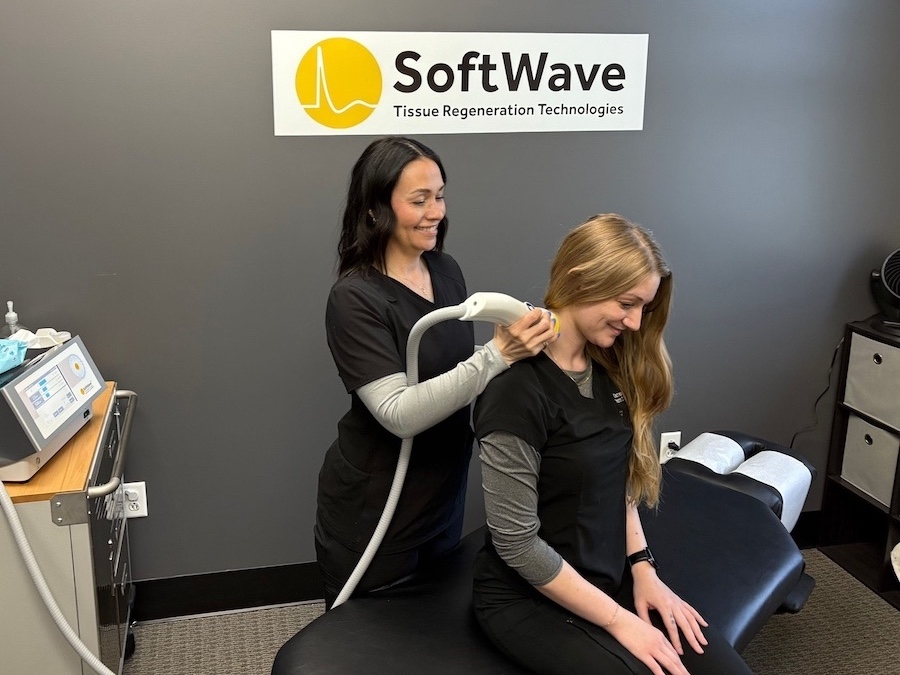
 Shockwave therapy in Kansas City is helping people avoid surgery and get relief from pain they’ve struggled with for years. You’ve tried physical therapy. You’ve done the exercises. You’ve rested, iced, stretched, and taken every pill your doctor recommended. But that shoulder still won’t let you sleep through the night. Or that plantar fasciitis makes every morning feel like walking on broken glass. Or your knee pain keeps you from playing with your grandkids.
At Dohrmann Chiropractic in Kansas City, we’re seeing remarkable results with SoftWave Therapy, an advanced form of shockwave treatment that’s helping people avoid surgery and get back to their lives. Since bringing this technology to our practice on North McGee Street, we’ve watched chronic pain patients finally find relief after years of struggling.
Shockwave therapy uses acoustic waves—powerful sound waves—to jumpstart your body’s natural healing response. These waves penetrate deep into injured tissue, break up scar tissue, increase blood flow, and activate your body’s own stem cells. Your body does the healing. The technology just gives it the push it needs.
Dr. Ben Dohrmann, Dr. Kevin McFadden, and Dr. Frank Siraguso have completed specialized training in SoftWave Therapy. They’ve seen it work for conditions that didn’t respond to anything else. Plantar fasciitis that lasted for years. Shoulder pain that survived months of physical therapy. Knee arthritis that had people considering replacement surgery.
What Is SoftWave Shockwave Therapy?
SoftWave shockwave therapy is a non-invasive treatment that uses electrohydraulic supersonic acoustic waves to stimulate tissue regeneration and reduce pain in injured or degenerative areas. The technology was originally developed in 2004 for breaking up kidney stones, and medical researchers discovered these same acoustic waves could trigger powerful healing responses in muscles, tendons, ligaments, and joints.
Here’s how it works. The SoftWave device creates high-energy sound waves that travel through your skin into the damaged tissue below. These aren’t the sound waves you hear. They’re mechanical waves that create pressure changes inside your cells.
When these waves hit injured tissue, several things happen. Blood vessels start growing in areas that had poor circulation. Dormant stem cells wake up and start repairing damage. Scar tissue and calcium deposits break down. Inflammation decreases. Your body shifts from chronic inflammation mode into active healing mode.
The treatment itself takes about 10 minutes per area. We apply gel to your skin, similar to what’s used for ultrasound. Then we move the treatment head over the painful area. You’ll feel a tapping sensation. Some areas are more sensitive than others, but most people tolerate it well.
SoftWave is different from focused shockwave therapy. Focused shockwave concentrates all the energy at one specific depth, which can be painful and sometimes damages surrounding tissue. SoftWave uses unfocused waves that spread through a larger treatment area. This makes it more comfortable and allows us to treat bigger regions in less time.
What Conditions Does Shockwave Therapy Treat?
Shockwave therapy treats plantar fasciitis, shoulder pain, knee arthritis, tendonitis, back pain, sciatica, hip pain, elbow pain, sports injuries, and many other musculoskeletal conditions that involve inflammation or tissue damage. If you have chronic pain that hasn’t responded to conservative treatment, shockwave therapy might help.
Plantar fasciitis is one of the most researched applications. That stabbing heel pain that makes your first steps in the morning unbearable responds remarkably well to shockwave treatment. Most people see improvement within three to five sessions.
Shoulder problems—rotator cuff issues, frozen shoulder, calcific tendonitis—often improve with SoftWave Therapy. The waves break up calcium deposits, reduce inflammation in the bursa, and help damaged rotator cuff tendons heal.
Knee pain from arthritis gets better when we improve blood flow to the joint and reduce inflammation. We can’t regenerate cartilage that’s completely gone, but we can often reduce pain enough that people avoid or delay knee replacement surgery.
Tennis elbow and golfer’s elbow both involve tendon damage at the elbow. Shockwave therapy breaks up the degenerative tissue and stimulates new, healthy tendon growth. People who’ve had elbow pain for years often see dramatic improvement.
Achilles tendonitis, hip bursitis, shin splints, and other sports injuries respond well to treatment. Athletes from high schools around Gladstone, Liberty and Parkville come here to speed up recovery and get back to their sport faster.
We also treat neuropathy with SoftWave. The increased blood flow and nerve regeneration help reduce numbness and tingling in hands and feet. This works especially well for people with diabetic neuropathy or peripheral neuropathy from other causes.
How Is This Different from Other Treatments?
Shockwave therapy is different from other treatments because it actually stimulates healing and tissue regeneration rather than just managing symptoms or numbing pain. Physical therapy stretches and strengthens. Medication masks pain. Injections provide temporary relief. Surgery removes or repairs damaged tissue. But SoftWave helps your body heal itself from the inside out.
Steroid injections can reduce inflammation temporarily, but they don’t heal anything. In fact, repeated steroid injections can weaken tendons and lead to ruptures. We see patients all the time who’ve had multiple injections that stopped working.
Physical therapy is great for many conditions. We often recommend it alongside shockwave treatment. But sometimes injured tissue won’t respond to exercise alone. The tissue needs to heal first before it can strengthen. That’s where shockwave comes in.
Platelet-rich plasma (PRP) injections also promote healing, but they’re expensive, painful, and require drawing your blood. SoftWave is non-invasive and typically costs less than PRP.
Surgery should be a last resort. It comes with risks, requires recovery time, and doesn’t always solve the problem. We’ve helped many people across Kansas City avoid surgery with shockwave therapy. Even people who were scheduled for surgery found they didn’t need it after completing a course of SoftWave treatments.
Does Shockwave Therapy Really Work?
Shockwave therapy really works for most people when used for appropriate conditions, with research showing success rates of 70-90% for conditions like plantar fasciitis, tennis elbow, and calcific shoulder tendonitis. The treatment is FDA-cleared and used by major medical centers including the Cleveland Clinic, Mayo Clinic, and Walter Reed Military Center.
The research backs this up. Hundreds of published studies show shockwave therapy’s effectiveness for various conditions. It’s not experimental or unproven. It’s an established treatment used worldwide.
That said, results vary from person to person. Someone with a recent injury often responds faster than someone with a chronic problem that’s been there for years. Younger patients typically heal faster than older ones, though we’ve seen excellent results in patients of all ages.
Most people start noticing improvement after three to five treatments. Pain decreases. Movement improves. Activities that were impossible become manageable again. Some patients feel better immediately after their first session. Others need more time.
The improvements tend to continue even after treatment ends. That’s because we’re stimulating actual healing, not just temporarily reducing symptoms. Your body keeps repairing itself for weeks after the final treatment.
How Many Treatments Will I Need?
Most people need six to ten shockwave therapy sessions spaced about a week apart to get the best results, though some conditions improve in as few as three sessions. Treatment plans vary based on your specific condition, how long you’ve had it, and how severe it is.
We typically schedule treatments once per week, however might start out at twice per week (every other day) for two weeks depending on your condition. This gives your body time to respond to each session before the next one. The healing process takes time. You can’t rush it.
Acute injuries often need fewer treatments than chronic conditions. If you twisted your ankle last month, you might be better in three or four sessions. If you’ve had plantar fasciitis for three years, you’ll probably need the full series.
Some patients come back for maintenance treatments every month or two. This is especially common for people with arthritis or degenerative conditions. A tune-up treatment keeps inflammation down and prevents pain from coming back.
We reassess your progress regularly. If you’re not improving as expected, we adjust the treatment plan. Sometimes we need to increase the intensity. Sometimes we need to treat a different area that’s contributing to the problem.
Is Softwave Therapy Painful?
Shockwave therapy causes some mild discomfort during treatment, but most people find it tolerable and the sensation only lasts while the device is actively treating the area. The level of discomfort depends on the condition being treated and your personal pain tolerance.
The treatment feels like someone tapping on your skin with a hard object. Some areas are more sensitive than others. Bony areas and acutely inflamed tissue tend to hurt more. Muscular areas are usually less sensitive.
Many patients describe the sensation as “uncomfortable but bearable.” You can always ask us to reduce the intensity if it’s too much. We adjust the settings based on your feedback.
Interestingly, the discomfort during treatment often indicates we’re hitting the right spot. When we treat healthy tissue, it doesn’t hurt much. When we treat damaged or inflamed tissue, you feel it more. That’s actually a good sign.
After treatment, the area might feel sore for a day or two. This is normal. Your body is responding to the stimulus and starting the healing process. The soreness typically decreases with each subsequent treatment as the tissue heals.
We don’t use numbing medication before treatment. Local anesthetics can interfere with the healing response. We want your body to feel what’s happening so it can respond appropriately.
What Happens During a SoftWave Treatment Session?
During a SoftWave treatment session, you’ll sit or lie comfortably while we apply gel to the treatment area and move the device over your skin for about 10 minutes per region. We can treat multiple areas in one visit if needed.
First, we identify exactly where to treat. We feel for tender spots, areas of restriction, and points of maximum pain. We might mark these spots so we remember where to focus during treatment.
Then we apply ultrasound gel. This helps the sound waves transmit from the device into your tissue. Without the gel, most of the energy would bounce off your skin.
The device has a treatment head that we press against your skin and move in a systematic pattern over the injured area. The machine makes a clicking or tapping sound as it delivers the shockwaves. You feel each pulse.
We adjust the intensity based on what you’re treating and how you respond. We might start lower and increase gradually as you get used to the sensation. Or we might vary the intensity across different parts of the treatment area.
After treatment, we wipe off the gel and you’re done. No bandages, no restrictions, no recovery time. You can drive yourself home and go about your day. We recommend staying active and moving the treated area, as movement helps the healing process.
Can I Combine SoftWave with Other Treatments?
You can absolutely combine SoftWave therapy with chiropractic adjustments, physical therapy, and other conservative treatments for better overall results. At Dohrmann Chiropractic, we often use multiple approaches together because they work synergistically.
Chiropractic adjustments restore proper joint movement. SoftWave heals the soft tissue around those joints. Together, they address both components of most musculoskeletal problems. We see better outcomes when we combine treatments than when we use either one alone.
Physical therapy exercises strengthen muscles and improve movement patterns. But exercise works better when the underlying tissue is healing properly. SoftWave creates the conditions for healing, then exercise builds on that foundation.
We also combine SoftWave with our DRX9000 spinal decompression for certain disc problems. Decompression takes pressure off the disc while SoftWave helps the surrounding muscles, ligaments, and nerves heal.
Dr. Ben, Dr. Kevin, and Dr. Frank work together to design treatment plans that use the right combination of therapies for your specific situation. You’re not just getting one treatment. You’re getting a complete approach to healing.
Are There Any Side Effects?
Side effects from shockwave therapy are minimal and usually limited to temporary soreness, mild swelling, or redness in the treated area that resolves within a day or two. Serious complications are extremely rare when the treatment is performed correctly.
The most common side effect is soreness after treatment. This is actually a sign that your body is responding and starting the healing process. The soreness typically feels like you exercised that area hard. It goes away on its own.
Some people develop minor bruising at the treatment site. This is more common in people who bruise easily or those taking blood thinners. The bruising is superficial and harmless.
You might notice that your pain temporarily increases for a day or two after treatment before it gets better. This is normal and doesn’t mean the treatment isn’t working. It means your body is actively healing.
We screen every patient before treatment to make sure shockwave therapy is safe for them. There are a few conditions where we can’t use it—pregnancy, blood clotting disorders, certain medications, tumors in the treatment area, or infections. But for most people, it’s very safe.
How Long Do Results Last?
Results from shockwave therapy can last for years because the treatment stimulates actual tissue healing and regeneration, not just temporary symptom relief. Many patients experience permanent improvement, especially when they maintain good movement habits and address underlying causes.
Unlike medication or injections that wear off, shockwave therapy creates structural changes in your tissue. New blood vessels grow. Scar tissue breaks down. Healthy tissue replaces damaged tissue. These changes last.
That said, your results depend partly on what you do after treatment. If you had tennis elbow from playing tennis with bad form, and you go back to playing with the same bad form, you’ll probably hurt yourself again. SoftWave fixes the damage, but you need to prevent new damage.
We teach you exercises and stretches to maintain your improvement. We talk about activity modification if needed. We want you to stay better long-term, not just feel better for a few weeks.
Some people with degenerative conditions like arthritis come back for periodic maintenance treatments. This isn’t because the original treatment failed. It’s because arthritis is a progressive condition. Periodic treatments keep inflammation and pain under control.
What Makes SoftWave Different from Other Shockwave Devices?
SoftWave is different from other shockwave devices because it uses unfocused electrohydraulic technology that treats a larger area more comfortably while still delivering powerful healing effects. Many clinics use focused shockwave devices that concentrate all the energy at one point, which can be quite painful.
Focused shockwave has its place for very specific conditions, but unfocused shockwave like SoftWave offers several advantages. It treats a broader area in less time. It’s more comfortable for patients. And it’s less likely to cause tissue damage from too much concentrated energy.
SoftWave is also FDA-cleared, which means it’s met safety and effectiveness standards. Not all shockwave devices have this clearance. When you choose SoftWave, you’re choosing proven technology.
The electrohydraulic mechanism produces true shockwaves, not radial pressure waves like some cheaper devices. True shockwaves penetrate deeper and create more powerful biological effects. This means better results with fewer treatments.
Major medical institutions use SoftWave. The Cleveland Clinic, Mayo Clinic, and Walter Reed Military Center trust this technology. If it’s good enough for them, it’s good enough for Kansas City.
Who Shouldn’t Get Shockwave Therapy?
You shouldn’t get shockwave therapy if you’re pregnant, have a blood clotting disorder, take blood thinners, have an infection in the treatment area, or have certain other medical conditions. We carefully screen every patient to make sure treatment is safe.
Pregnancy is a contraindication because we don’t have research showing it’s safe for developing babies. We avoid treating pregnant women out of an abundance of caution.
Blood clotting disorders or blood thinning medications increase your risk of bruising and bleeding. Sometimes we can still treat you, but we use lower intensity settings and monitor you carefully.
Active infections need to be treated with antibiotics, not shockwave therapy. We wait until the infection clears before starting treatment.
Cancer in the treatment area is also a contraindication. Shockwave therapy increases blood flow and could theoretically spread cancer cells. We don’t treat over known tumors.
People with pacemakers need special consideration. Shockwave therapy can potentially interfere with pacemaker function. We consult with your cardiologist before treating.
During your initial consultation, we review your complete medical history and medications. If we identify any concerns, we discuss them with you and decide together whether shockwave therapy is appropriate.
What Should I Expect After Treatment?
After shockwave treatment, you should expect some soreness in the treated area for one to two days, followed by gradual improvement over the next few weeks as your body heals. You can return to normal activities immediately, though we recommend avoiding intense exercise of the treated area for 48 hours.
The healing process doesn’t happen overnight. Your body needs time to grow new blood vessels, regenerate tissue, and reduce inflammation. Most people notice progressive improvement over four to six weeks.
Some patients feel immediate pain relief after their first treatment. This is usually temporary. The real, lasting improvement comes as the tissue heals over the following weeks.
We encourage you to stay active between treatments. Movement promotes healing. Blood flow is good. Just avoid activities that originally caused your injury or aggravate your pain.
You don’t need to take pain medication unless the soreness really bothers you. Over-the-counter anti-inflammatories are fine if needed, though some research suggests they might slightly reduce the healing response from shockwave therapy.
Keep your scheduled follow-up appointments. Consistency matters. Skipping treatments or spacing them too far apart reduces effectiveness. The treatment protocol is designed to work as a series, not as individual sessions.
How Much Does Shockwave Therapy Cost?
The cost of shockwave therapy varies based on how many areas we’re treating and how many sessions you need. During your initial visit, we’ll review the doctor’s recommendations and provide clear pricing for your specific treatment plan, along with available payment options. Insurance does not cover shockwave therapy. It is considered an elective service.
Even if insurance doesn’t cover the treatment, consider the value. What’s it worth to avoid surgery? To sleep through the night without pain? To play with your grandkids again? To return to the activities you love?
We offer financing options to make treatment accessible. Your health is an investment, and we want to help you get the care you need without breaking your budget.
When you compare shockwave therapy costs to surgery, months of physical therapy, or years of medication, conservative treatment often saves money in the long run. Plus, you avoid surgical risks and recovery time.
Ready to Try SoftWave Therapy?
If chronic pain is controlling your life, shockwave therapy might be the solution you’ve been looking for. Whether you’re dealing with plantar fasciitis, shoulder pain, knee arthritis, or any other musculoskeletal condition, SoftWave offers hope for real healing.
We offer a comprehensive consultation where we examine your condition, review your history, and determine if you’re a good candidate for treatment. We’ll be honest about whether we think shockwave therapy can help you.
Call or text our office at 816-436-5520 or schedule online. New patients can often get in the same day.
Bring any X-rays, MRI reports, or medical records you have. The more we know about your condition, the better we can help you.
You deserve to live without pain limiting your every move. Whether you’re in Kansas City, Gladstone, Parkville, Liberty, or Smithville, we’re here to help you heal naturally without drugs or surgery.
Thousands of patients have found relief with SoftWave Therapy at leading medical centers around the world. Now this proven technology is available right here at Dohrmann Chiropractic.
Dohrmann Chiropractic
9576 North McGee Street
Kansas City, MO 64155
(816) 436-5520
Office Hours:
Monday-Friday: 9am-12pm, 2:30pm-5:30pm
Saturday: 9am-12pm
