
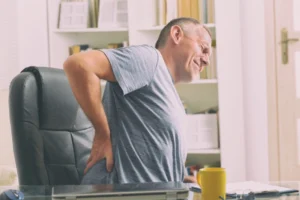
 If you or a loved one has been diagnosed with spinal stenosis or neuroforaminal stenosis, you already know how limiting this condition can be — the radiating pain, the numbness in your hands or feet, the difficulty walking even short distances. The good news is that surgery is not your only option. At Dohrmann Chiropractic in Kansas City, MO, our team provides effective, non-surgical spinal stenosis treatment that targets the root cause of nerve compression — not just the symptoms.
Dr. Ben Dohrmann of Dohrmann Chiropractic is a leading chiropractor in Kansas City, Missouri, serving the greater Kansas City community including Gladstone, Parkville, and Liberty. With over 17 years of clinical experience, an Olympic Team Chiropractor credential from the London 2012 Summer Olympics, and advanced technologies like SoftWave therapy and the DRX9000 spinal decompression system, Dr. Dohrmann and his three-doctor team have helped thousands of patients find lasting relief from spinal stenosis without drugs or surgery.
What Is Spinal Stenosis?
Spinal stenosis is a condition in which the spaces within the spinal column narrow, placing pressure on the spinal cord and the nerves that travel through it. This narrowing most commonly occurs in two areas: the lumbar spine (lower back) and the cervical spine (neck). When the central spinal canal narrows, it is called central canal stenosis. When the smaller openings on either side of the spine — the neuroforamen — narrow, it is called neuroforaminal stenosis (also referred to as foraminal stenosis).
The neuroforamen are small tunnels at each spinal level where nerve roots exit the spinal cord and travel to every part of your body. When these openings shrink due to disc degeneration, bone spurs, or other structural changes, the nerve roots become compressed. This compression disrupts normal nerve signaling and can produce pain, tingling, numbness, and muscle weakness in the arms, legs, hands, or feet — depending on which level of the spine is affected.
Common Causes of Spinal Stenosis and Neuroforaminal Stenosis
Understanding what causes spinal canal narrowing is an important first step toward effective treatment. The most common causes include:
- Degenerative disc disease — As spinal discs lose height and hydration over time, the neuroforaminal openings shrink, compressing nearby nerve roots. Dr. Dohrmann was personally diagnosed with degenerative disc disease at age 23, giving him a firsthand understanding of how this condition affects daily life.
- Osteoarthritis and bone spurs — Degenerative joint changes can cause bony overgrowths (osteophytes) that encroach into the spinal canal or foraminal openings.
- Disc herniations and bulges — A bulging or herniated disc can protrude into the spinal canal or foramen, narrowing the available space for nerves.
- Thickened ligaments — The ligamentum flavum and other spinal ligaments can thicken with age, further reducing canal space.
- Spondylolisthesis — When one vertebra slips forward over the one below it, the resulting misalignment narrows the canal and foraminal openings.
- Previous spinal injury or trauma — Auto accidents, falls, and sports injuries can accelerate degenerative changes that lead to stenosis over time.
While aging is the most common contributing factor, spinal stenosis does not only affect older adults. Many patients in the Kansas City area — from North KC to Smithville and throughout Clay County and Platte County — develop stenosis symptoms in their 40s and 50s, especially if they have a history of disc problems, repetitive physical stress, or prior injuries.
Symptoms of Spinal Stenosis and Foraminal Stenosis
Spinal stenosis symptoms develop gradually and tend to worsen over time as nerve compression increases. Symptoms vary depending on which part of the spine is affected:
Lumbar spinal stenosis symptoms (lower back):
- Pain, cramping, or heaviness in the lower back and legs
- Sciatica — sharp, radiating pain down one or both legs
- Numbness or tingling in the feet, calves, or thighs
- Leg weakness that worsens with standing or walking
- Relief when sitting, bending forward, or leaning on a shopping cart (a hallmark sign called neurogenic claudication)
Cervical spinal stenosis symptoms (neck):
- Neck pain and stiffness
- Numbness or tingling radiating into the shoulders, arms, or hands
- Grip weakness or difficulty with fine motor tasks
- Balance and coordination problems
Neuroforaminal stenosis symptoms:
- Pain that radiates along the path of a specific nerve root — into the arm (cervical) or leg (lumbar)
- Burning, electric, or shooting sensations
- Muscle weakness in the affected extremity
- Symptoms that worsen when turning the head or extending the spine
Many of these symptoms overlap with peripheral neuropathy, which is why an accurate diagnosis is essential before beginning any treatment plan.
If you experience sudden loss of bladder or bowel control along with significant leg weakness, seek emergency medical care immediately, as this may indicate a serious complication called cauda equina syndrome.
How Dohrmann Chiropractic Treats Spinal Stenosis Without Surgery
At our North McGee Street office near Gladstone, our team takes an integrative, multi-modal approach to spinal stenosis care. Rather than masking pain with medication, we focus on reducing nerve compression, restoring spinal mobility, and supporting the body’s natural healing processes. Our approach combines several proven therapies under one roof:
Chiropractic Adjustments
Precise chiropractic adjustments help restore proper alignment to the spine, which can open narrowed foraminal canals and reduce mechanical pressure on compressed nerves. Our doctors use specific techniques, including flexion-distraction — a gentle, low-force method that research has shown to be particularly effective for lumbar spinal stenosis. By improving spinal joint mobility and alignment, adjustments address one of the core structural factors that causes stenosis symptoms.
Spinal Decompression With the DRX9000
The DRX9000 spinal decompression system is a cornerstone of our stenosis treatment program. This FDA-cleared, computer-controlled system gently stretches the spine using precisely calibrated forces, creating negative intradiscal pressure that helps retract bulging or herniated disc material away from compressed nerves. For patients with stenosis caused or worsened by disc degeneration and herniation, the DRX9000 can increase the space available for nerve roots within the foraminal canals — all without surgery or downtime.
SoftWave Shockwave Therapy
SoftWave therapy is an FDA-cleared tissue regeneration technology that uses electrohydraulic supersonic acoustic waves to stimulate healing at the cellular level. For spinal stenosis patients, SoftWave can reduce chronic inflammation around compressed nerves, improve local blood flow, and support nerve regeneration — particularly beneficial for patients experiencing neuropathy symptoms like numbness and tingling. This is the same technology trusted by the Cleveland Clinic, Mayo Clinic, and Walter Reed Military Center.
On-Site Digital X-Ray
Accurate diagnosis is the foundation of effective stenosis treatment. Our on-site digital X-ray imaging allows us to evaluate spinal alignment, identify areas of degeneration, detect bone spurs, and assess disc space narrowing — all during the same visit. This immediate imaging capability means no referral delays and a faster path to a personalized treatment plan. When advanced imaging such as MRI is needed to fully evaluate the degree of canal or foraminal narrowing, we coordinate that process seamlessly.
A True Team Approach
Spinal stenosis treatment at Dohrmann Chiropractic is never one-size-fits-all. Dr. Dohrmann, Dr. Kevin McFadden, and Dr. Frank Siraguso collaborate on every patient’s care plan, bringing over 46 years of combined clinical experience to the table. Whether your stenosis is mild and responsive to conservative adjustments or more complex and requiring a combination of decompression and SoftWave therapy, our team builds a plan tailored to your specific diagnosis, symptoms, and goals.
Who Is at Risk for Spinal Stenosis?
Spinal stenosis affects millions of Americans and is one of the most common reasons for spine-related doctor visits among adults over 50. You may be at higher risk if you:
- Are over 50 years old
- Have a history of degenerative disc disease or osteoarthritis
- Have had a previous spinal injury, including auto accident injuries
- Work in physically demanding occupations
- Have a family history of spinal degeneration
- Lead a sedentary lifestyle with poor posture
Residents across the Kansas City metro — from Liberty and Parkville to communities along the I-35 corridor — often develop stenosis symptoms after years of physical work, sports activity, or simply the natural aging process. Early intervention with conservative, drug-free care can make a meaningful difference in long-term outcomes.
What to Expect at Your First Visit
When you visit Dohrmann Chiropractic for spinal stenosis concerns, your first appointment will include a thorough evaluation: a detailed health history, orthopedic and neurological testing, and on-site digital X-rays. We want to understand not just where your stenosis is, but what is causing it and how it is affecting your daily life.
Based on these findings, our doctors will explain your diagnosis in plain language and present a customized treatment plan. Many patients begin to notice improvement within the first few weeks of care, though the pace of progress depends on the severity and type of stenosis. We believe in transparency — you will always know what we recommend, why we recommend it, and what results you can realistically expect.
Walk-ins are welcome, and we offer flexible appointment hours Monday through Saturday. We accept most insurance plans and provide affordable care options with financing available.
Why Kansas City Patients Choose Dohrmann Chiropractic for Spinal Stenosis
Choosing the right provider for spinal stenosis treatment matters. Here is why over 600 patients have left five-star Google reviews for our practice:
- Experience that counts: Over 46 years of combined clinical experience across three doctors, all trained at Cleveland Chiropractic College.
- Olympic-level expertise: Dr. Dohrmann served as an Olympic Team Chiropractor at the London 2012 Summer Olympics — one of the highest professional honors in chiropractic.
- Advanced technology: SoftWave therapy, DRX9000 spinal decompression, and digital X-ray — all under one roof, all available without external referrals.
- Drug-free philosophy: Every treatment decision is guided by a commitment to helping you heal naturally, without medications or surgery.
- Genuine collaboration: All three doctors stay informed on every patient’s progress, so your care is never fragmented.
- Community roots: Proudly serving Kansas City, Gladstone, Parkville, Liberty, and Smithville since 2008.
Frequently Asked Questions About Spinal Stenosis Treatment
Can a chiropractor really help with spinal stenosis?
Yes. Chiropractic adjustments, particularly flexion-distraction techniques, can improve spinal alignment, open narrowed foraminal canals, and reduce nerve compression. When combined with spinal decompression and SoftWave therapy as we do at Dohrmann Chiropractic, many patients achieve significant symptom relief without surgery.
What is the difference between spinal stenosis and neuroforaminal stenosis?
Spinal stenosis refers to narrowing of the central spinal canal where the spinal cord travels. Neuroforaminal stenosis refers to narrowing of the smaller side openings where individual nerve roots exit the spine. Both can cause pain, numbness, and weakness, but foraminal stenosis typically affects one specific nerve root and its corresponding extremity.
Is spinal decompression therapy effective for stenosis?
The DRX9000 spinal decompression system gently creates negative pressure within the disc, helping to retract bulging disc material and increase space within the foraminal canals. For stenosis caused or worsened by disc degeneration and herniation, this non-surgical approach can provide meaningful relief from nerve compression symptoms.
How long does spinal stenosis treatment take?
Treatment duration depends on the severity and type of stenosis. Many patients at our Kansas City practice notice symptom improvement within the first few weeks. A comprehensive treatment plan typically spans several weeks to a few months of consistent care, with periodic re-evaluation to track progress and adjust as needed.
Does SoftWave therapy help with spinal stenosis nerve pain?
SoftWave therapy’s ability to reduce inflammation, stimulate blood flow, and support nerve regeneration makes it a powerful tool for stenosis-related nerve pain and neuropathy symptoms. It is FDA-cleared, non-invasive, and requires no downtime — trusted by the Mayo Clinic, Cleveland Clinic, and Walter Reed Military Center.
Should I consider surgery for spinal stenosis?
Surgery may be appropriate in severe cases, but conservative treatment should always be explored first. At Dohrmann Chiropractic, many patients who were told surgery was their only option have found significant relief through our combination of chiropractic adjustments, DRX9000 decompression, and SoftWave therapy.
Take the First Step Toward Spinal Stenosis Relief in Kansas City
Living with spinal stenosis or neuroforaminal stenosis does not mean accepting a future of chronic pain, limited mobility, or dependence on medications. Dr. Ben Dohrmann and the team at Dohrmann Chiropractic are here to help you explore effective, natural treatment options — right here in Kansas City.
Call us today at (816) 436-5520 to schedule your evaluation, or stop by our office — walk-ins are always welcome.
Dohrmann Chiropractic
9576 N McGee St, Kansas City, MO 64155
Phone: (816) 436-5520 (Call or Text)
Web: dohrmannchiropractic.com
Hours: Monday–Friday: 9am–12pm, 2:30pm–5:30pm | Saturday: 9am–12pm