
 For most people with a disc problem, professional spinal decompression is the more controlled and better-studied option, while an inversion table is a cheaper home tool with mixed research behind it. Both aim to take pressure off your spine by gently stretching it, but they work very differently and carry different risks. At Dohrmann Chiropractic in Kansas City, patients ask us about this comparison all the time, usually after seeing an inversion table for sale and wondering if it can do the same job.
What Is the Difference in Spinal Decompression vs Inversion Table Therapy?
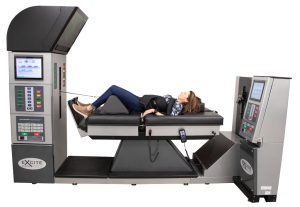
An inversion table tilts your whole body upside down or at an angle so gravity pulls on your spine. Spinal decompression uses a computer-controlled table that applies a measured stretching force to a specific part of your spine while you lie comfortably, face up or face down. One relies on your body weight and gravity. The other relies on a clinician-guided, adjustable system.
The goal in both cases is to create a little more space between the vertebrae, reduce pressure on a painful disc, and ease irritation on a nearby nerve. That’s where the similarity ends.
How Does the DRX9000 Differ From Hanging Upside Down?
The DRX9000 spinal decompression system lets the doctor aim the stretch at the level of your spine that’s actually hurting, such as the lower back or neck, and adjust the angle, force, and timing for your body. It alternates stretching and relaxing phases so your muscles don’t tense up and fight the treatment. You stay supported and comfortable throughout, and your doctor can change the settings in real time.
An inversion table is a one-size-fits-all position. You can adjust the tilt, but you can’t target a single disc level, and you can’t easily control how much stretch you get. Your muscles may also tighten reflexively when you’re hanging, which can work against the stretch.
What Does the Research Say on Spinal Decompression vs Inversion Table Results?
The honest answer on spinal decompression vs inversion table research is that the evidence is mixed. The Cleveland Clinic notes that research on inversion tables is mixed, with some small studies finding relief and others finding no benefit, and says larger, higher-quality studies are still needed. A Healthline overview similarly describes the evidence as inconclusive, with possible short-term relief but little proof of long-term benefit.
Non-surgical spinal decompression has its own research limits, and results vary by patient and condition. That’s why we don’t promise outcomes. What we can say is that a supervised, targeted approach is easier to control and monitor than a self-directed home device, and that your exam findings decide whether it fits you.
Which Is Safer: Spinal Decompression vs Inversion Table?
Inversion tables carry more risks because hanging upside down changes your blood pressure and increases pressure in your eyes and head. The Cleveland Clinic lists high or low blood pressure, heart conditions, glaucoma and other eye diseases, a history of stroke, acid reflux, and pregnancy among the reasons to talk to a provider first, and cautions that inversion isn’t safe for everyone. People also get dizzy or strain muscles when they start out, and a fall from a poorly secured table is a real hazard.
Spinal decompression keeps you lying flat and supported, so it avoids those upside-down risks. It isn’t right for everyone either. We screen for conditions that make it unsafe or unlikely to help, such as pregnancy, certain spinal fractures, severe osteoporosis, and some types of spinal hardware. If your exam shows decompression isn’t a good fit, we’ll say so.
Which Conditions Respond Best to Spinal Decompression?
Decompression is most often used for disc-related back and neck pain. Common examples include a bulging disc, a herniated disc, sciatica, degenerative disc disease, and spinal stenosis with a disc component. The best candidates have pain tied to disc pressure and haven’t gotten lasting relief from rest, medication, or basic stretching.
If your pain is mostly muscular, or it comes from a source other than a disc, a different treatment may serve you better. A proper exam tells us which category you’re in.
How Many Sessions Does Spinal Decompression vs Inversion Table Care Take?
Professional decompression is a structured course of care, typically 20 to 25 sessions over 8 to 12 weeks, adjusted to your condition and progress. Each session is a comfortable, supervised appointment. An inversion table is something you use on your own schedule, often a few minutes at a time, and the Cleveland Clinic suggests starting with just 30 to 45 seconds and building up gradually.
Cost and convenience are the main reasons people weigh spinal decompression vs inversion table options. If you’re weighing both, the practical question is whether you want a self-directed tool with limited proof or a guided plan built around your exam findings. Our related guides cover how spinal decompression compares with surgery and whether it can help after failed back surgery.
Can You Use Both Spinal Decompression and an Inversion Table?
Most people don’t need both, and combining them without guidance isn’t a good idea. If you already own an inversion table, tell us before starting care and check with your doctor about whether it’s safe for you. We may recommend you stop using it while you’re in treatment so we can judge how your spine is responding.
How Do We Decide What Is Right for Your Spine?
Every plan starts with your history, a physical and neurological exam, and, when needed, on-site digital X-rays. Dr. Ben Dohrmann, Dr. Kevin McFadden, and Dr. Frank Siraguso use those findings to decide whether decompression, chiropractic care, or a combination fits you best.
Dr. Dohrmann was diagnosed with degenerative disc disease at age 23 and found relief through chiropractic care himself, so he approaches disc pain from both sides of the table.
Why Kansas City Patients Choose Us for Spinal Decompression
Dohrmann Chiropractic has treated disc and nerve pain for patients across Kansas City, Gladstone, Parkville, Liberty, Smithville, Clay County, and Platte County since 2008, backed by more than 600 five-star Google reviews and 46+ years of combined clinical experience. Dr. Dohrmann, a former Olympic Team Chiropractor at the London 2012 Summer Olympics, and his team will give you a straight answer about what will and won’t help.
Comparing spinal decompression vs inversion table options for your back? Schedule online, call or text us at (816) 436-5520, or visit us at 9576 N McGee St, Kansas City, MO 64155.
Frequently Asked Questions
Is spinal decompression better than an inversion table?
For most disc problems, supervised spinal decompression offers more control and targeting, while inversion tables have mixed research and more safety concerns. Your exam determines what fits you.
Do inversion tables actually work for back pain?
The research is mixed. Some small studies show short-term relief, while others show no benefit, and higher-quality studies are still needed.
Is an inversion table safe?
Not for everyone. Hanging upside down affects blood pressure and pressure in the eyes and head, so people with heart conditions, high blood pressure, glaucoma, a history of stroke, or pregnancy should talk to a doctor first.
How is the DRX9000 different from traction?
The DRX9000 is computer-controlled and can target a specific spinal level, with adjustable angle, force, and timing, and it alternates stretch and relaxation phases so your muscles don’t resist.
How many spinal decompression sessions will I need?
A typical course is 20 to 25 sessions over 8 to 12 weeks, adjusted to your condition and progress.
Who should not get spinal decompression?
Pregnancy, certain spinal fractures, severe osteoporosis, and some types of spinal hardware can make it unsafe or ineffective. We screen every patient first.
Can I use my inversion table while getting decompression?
Tell us before you start. We may recommend pausing it so we can see how your spine responds, and you should check with your doctor about whether it’s safe for you.
Does Dohrmann Chiropractic treat patients outside Kansas City?
Yes. We regularly treat patients from Gladstone, Parkville, Liberty, Smithville, and throughout Clay County and Platte County, in addition to Kansas City itself.